

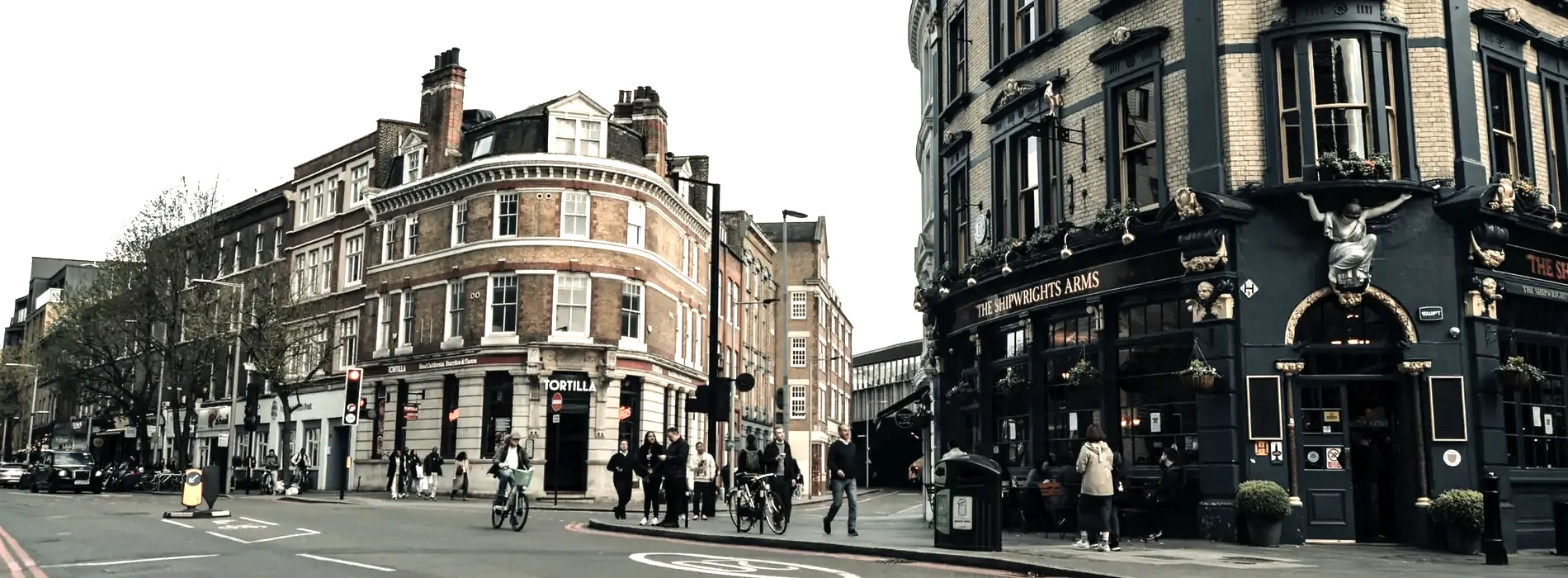
Harringay · Green Lanes · N4 / N8
Accountants in Harringay
Chartered accountants for the food, grocery and trade businesses along Green Lanes — VAT on food, payroll, and cash-heavy record keeping done properly. Turkish spoken.

Harringay — the neighbourhood on Green Lanes, not to be confused with Haringey the borough it sits in — has one of the densest runs of independent food business in London: grocers, bakeries, butchers, restaurants and ocakbaşı grills, many of them family-run and a good number trading in Turkish as their first language.
We work in Turkish as well as English, and the questions that come up here are consistent enough to be worth setting out plainly, because getting them wrong is expensive and getting them right is not difficult.
VAT on food
Hot against cold, eat-in against takeaway — decided at the till.
Türkçe hizmet
Görüşmeler ve yazışmalar Türkçe yapılabilir.
Cash-heavy bookkeeping
Records that stand up if HMRC asks to see them.
Payroll and tips
Shift staff, and tronc arrangements handled correctly.
VAT on food is the one worth getting right
The same item can be zero-rated or standard-rated depending on whether it is hot, whether it is eaten on the premises, and sometimes on how it is packaged. Cold food taken away is generally zero-rated; the same food served hot for immediate consumption is not; and anything eaten in is standard-rated regardless.
For a grocer the line runs through the stock: most food is zero-rated, but confectionery, crisps, soft drinks, and hot counter items are not. A till that does not distinguish them produces a VAT return that cannot be supported.
None of this is difficult once the till is set up. All of it is difficult to fix a year later across tens of thousands of small transactions, which is what an inspection asks you to do.
Cash businesses and records that hold
Taking a lot of cash is entirely normal and entirely legitimate. What causes trouble is records that cannot demonstrate it: takings written up weekly from memory, drawings taken from the till without being recorded, and suppliers paid in cash without an invoice.
Daily takings recorded from the till, a separate record of anything drawn out, and invoices kept for every purchase. That is the whole of it — and it is the difference between an ordinary compliance check and an assessment based on somebody else's assumptions about your margins.
Green Lanes
Harringay’s commercial life is a street. Green Lanes runs the length of it — Grand Parade and on northwards — and it is one of the densest concentrations of Turkish and Kurdish business in the country: ocakbaşı restaurants, bakeries, greengrocers, supermarkets, barbers, jewellers, wholesalers. Many are family-run, several are second-generation, and a good number have grown well past the point where the accounting arrangements they started with still fit.
That is the pattern we are asked about most here: a business that has done well, has staff and premises and sometimes a second site, and is still being run on records designed for one person and a cash box. Nothing is wrong exactly — but the VAT is being estimated, the payroll is handled by whoever has time, and nobody could answer quickly if HMRC asked how a figure was arrived at.
We work in Turkish as well as English, so the conversation about fixing that can happen in whichever language makes it easier to be precise. Türkçe konuşan bir muhasebeciyle çalışmak, özellikle vergi ve KDV gibi konularda, meseleyi baştan doğru anlatmanın en kolay yoludur.
Tips, service charge and staff in food businesses
This is the area where well-run restaurants most often have a problem they do not know about, because the rules changed and the practice did not.
Tips have to reach the staff
Employers are required to pass tips on to workers in full and to allocate them fairly, with a written policy where tips are more than occasional. Deducting a percentage for breakages, card fees or administration is not the free choice it once was. If your house practice predates the change, it is worth revisiting before somebody else raises it.
How you distribute them changes the tax
Tips paid out through the payroll by the employer attract National Insurance as well as income tax. Tips distributed through an independent tronc, genuinely run by a troncmaster rather than by the owner, can be treated differently for National Insurance. The distinction turns on who actually decides the allocation — so a tronc that exists on paper while the owner decides the split is not a tronc, and treating it as one is an expensive mistake to make for several years at a time.
Family working in the business
Paying a spouse, a son or a daughter is entirely legitimate, and it is also one of the first things looked at in an enquiry. The test is whether the work is real and the pay is commercially reasonable for it. A wage that reflects genuine hours is fine. A round number paid to somebody who does not work in the business is not, and the fact that it is family makes it more visible rather than less.
Frequently asked
Türkçe konuşan muhasebeci var mı?+
Evet. Görüşmeleri, telefonları ve yazışmaları Türkçe yapabiliriz — ayrıntılar için Türkçe muhasebeci sayfamıza bakabilirsiniz. Farsça ve İtalyanca da mümkün.
Is hot food zero-rated?+
No. Food sold hot for immediate consumption is standard-rated, and anything eaten on the premises is standard-rated whether it is hot or not. Most cold food taken away is zero-rated. The distinction has to be applied at the till, because it cannot be reconstructed from a single takings figure.
Is it a problem that most of my takings are cash?+
Not in itself — plenty of legitimate businesses are cash-heavy. What matters is that the records show it: daily takings from the till, anything you draw out recorded separately, and an invoice for every purchase. Without that, an inspection works from assumptions about your margins rather than from your figures.
We take a percentage of card tips to cover the fees. Is that still allowed?+
Generally no. The rules now require tips to be passed to workers in full and allocated fairly, and deductions for card charges or administration are not permitted the way they once were. Where tips are more than occasional you also need a written policy. If your practice has not changed in the last couple of years, it very likely needs to.
What is a tronc and do we need one?+
A tronc is an arrangement for distributing tips that is genuinely run by someone other than the employer — the troncmaster decides the allocation. Run properly it can change the National Insurance treatment of tips. The word carrying the weight is ‘genuinely’: if the owner decides who gets what, it is not a tronc regardless of what it is called, and the NIC will be due. Whether one is worth setting up depends on the size of your tips and how your team is structured.
Can I pay my wife and my son through the business?+
Yes, provided the work is real and the pay is what you would reasonably pay someone else to do it. That is the whole test, and it is a sensible one. Keep the same records you would for any other employee — hours, duties, payslips through the payroll — and it is straightforward. Pay a flat sum to someone who does not actually work there and it will not survive an enquiry.


Local to you
Chartered accountants, just up the road.
We are based in Finchley and work across North London. Come in, call, or do the whole thing by email — whichever suits you.
Or call 07480 281548